
What counts as a public record?
A public record is a document an office is obliged to keep and obliged to let you read. That obligation is what separates it from data a company has merely collected about you.
Seven kinds account for almost everything a search of a named person returns in the United States. Each sits with a different office, under a different statute, at a different price.
| Record | Held by | What it names |
|---|---|---|
| Court dockets | Federal and state courts | Parties, filings, judgments |
| Property deeds | County recorder | Owner, price paid, mortgage |
| Business filings | Secretary of State | Entity, agent, officers |
| Professional licences | Licensing board | Status, expiry, discipline |
| Voter registration | State election office | Name, address, party, turnout |
| Marriage and divorce | State vital records | Date, place, parties |
| Sex offender registry | State registry, via NSOPW | Name, photo, offence |
Reading any of them is lawful, since publication is the point of the system. The restrictions land on what you do with the result rather than on the search itself.
What do court records cost?
Federal dockets are on PACER, and it publishes its prices. Access costs $0.10 per page, capped at $3 for a document such as a docket, motion, order or brief, with audio files at $2.40 each.
Spend $30 or less on court records in a quarter and the fees are waived, which covers most one-off searches. Written court opinions are always free, and so is reading records at a courthouse terminal.
The free alternative is CourtListener's RECAP archive, which holds hundreds of millions of docket entries contributed by PACER users and costs nothing to read. It is a copy, so it lags the live docket.
What PACER does not hold is state court records, and the Court Statistics Project describes its state caseload data as covering more than 95% of all cases filed in the United States. For those you go court by court.
Property deeds and the county recorder
Deeds are recorded at county level, and the recorder sells copies at counter prices. Orange County, California charges $1 per page for a copy of an official record, and $1 more to certify it.
A recorded deed shows the chain of ownership: who conveyed the property to whom, when, and what mortgage was recorded against it. It is a document about a parcel, not a dossier about a person.
The limits matter. A deed names the owner of record, which may be a trust or a company rather than a human being, and it only changes when something new is filed.
Assessor records are a separate system in the same county, carrying valuation and parcel detail rather than the conveyance itself. Two offices, two indexes, two sets of opening hours, and no shared search across them.
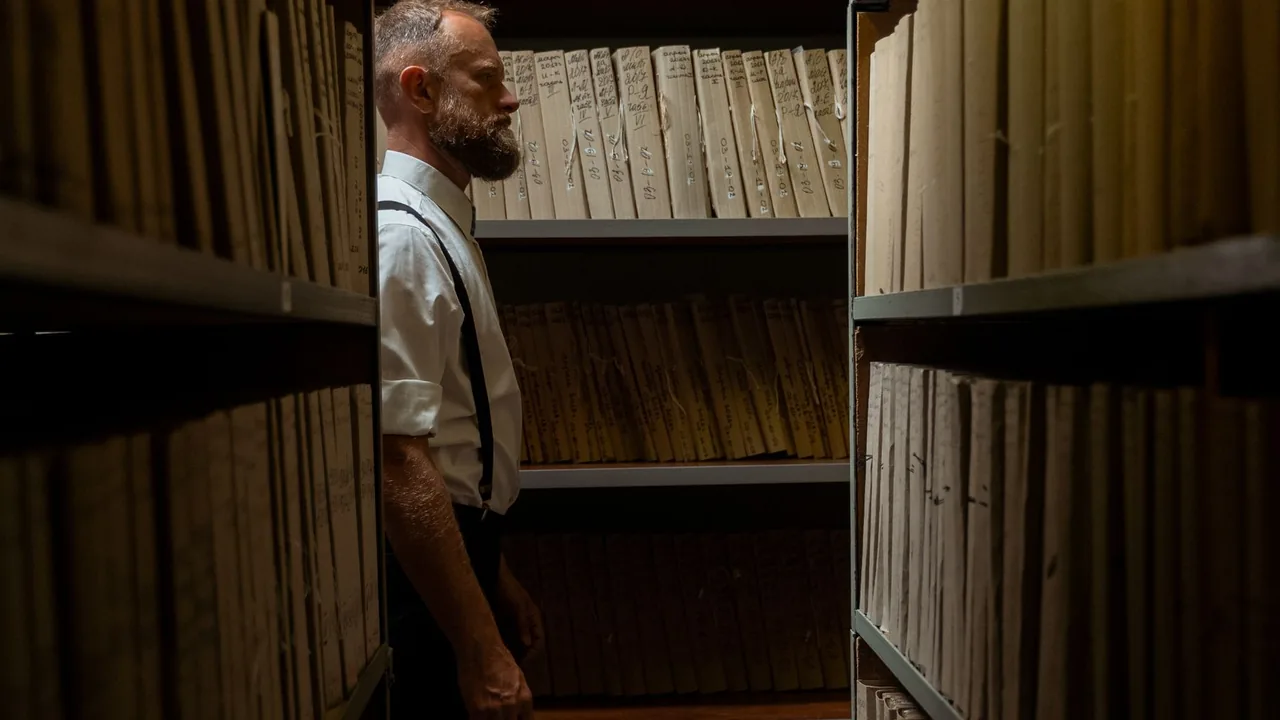
Each kind of record sits with a different office at a different price, which is why a national search is an aggregation rather than a register.
Which business and licence registers are free?
Both, in most states, at least to search. California's Secretary of State runs a free business search over more than 17 million corporate, LLC and limited partnership images, showing status, formation date, addresses and officers.
What it does not show is ownership. The state register carries the agent for service of process and the officers who signed the filings, not the members or beneficial owners behind them.
Licences sit with the board that issued them. California's Department of Consumer Affairs covers roughly 40 boards and bureaus in one search, and reports whether a licence is current, expired, or has been suspended or revoked.
Federal filings are the third layer. The SEC's EDGAR is free and full-text searchable, and it names the officers of reporting companies rather than of every small business.
Voter rolls, marriage and divorce records
Voter files are public in most states and restricted in all of them. The Election Assistance Commission notes that price, availability and data type vary by state, and that most states prohibit commercial use of the file.
A voter file may carry party affiliation, which elections somebody voted in, and the method of voting. What it never records is who they voted for: the ballot is secret, and the Commission states that no voter file contains that.
Marriage and divorce are held by the state rather than the nation. USA.gov directs you to the vital records office in the state where the marriage took place, and a divorce decree sits with the court that granted it.
That office decides the cost, the information you must supply, and whether copies come online, by post or in person. There is no national counter to ask instead.
Sex offender registries and their gaps
The Dru Sjodin National Sex Offender Public Website is the closest thing to a national register, and it is a search across other people's registers rather than a database of its own.
NSOPW runs as a partnership between the US Department of Justice and state, territorial and tribal governments, and it queries the registries of all 50 states, the District of Columbia, the territories and Indian Country.
Because the data belongs to each jurisdiction, coverage is uneven. NSOPW itself notes that a state which does not supply geographic coordinates cannot be searched by location at all.
A registry answers one narrow question: whether a person is on that state's list. Absence is not a clean record, and a name match with no photograph or date of birth is not an identification.
Why is there no national public records search?
Because the records were never national. Deeds sit with a county recorder, marriages with a state vital records office, business filings with a Secretary of State, and criminal matters with the court that heard them.
Each state runs its own registry and each county its own recorder, with its own software, its own fee schedule and its own idea of what belongs online at all.
So a national search is an aggregation. Somebody crawls or buys thousands of local systems, normalises them into one index and sells access to the result. Nothing about that is illegitimate — it is simply not a register.
The consequence is age. An aggregated record is a copy taken on the day the crawl ran, and there is usually nothing on the page telling you which day that was.
Do public records work the same outside the US?
No, and the difference does not run consistently in one direction. Some registers abroad are more open than their American equivalents, some are closed to anybody without a stated reason, and the split is rarely where a reader expects it.
The UK register of companies is free. Companies House returns the registered address, incorporation date, current and resigned officers, previous names, charge data and document images at no cost.
Land is not. HM Land Registry sells a title register or title plan for £7, naming the owner, the price last paid and any mortgage; the free summary gives the address and tenure only.
Germany goes the other way. Inspecting the Grundbuch requires a legitimate interest under § 12 of the Grundbuchordnung, a test written to rule out mere curiosity.
When is paying an aggregator worth it?
When you do not know which county to ask. That is the honest case for aggregation, and it is a real one: with a name and no address, finding the right recorder is the whole problem.
The dishonest case is being sold a document you could have ordered yourself. Sonoma County publishes both numbers: a private company solicits residents at $89 for a certified copy of their grant deed, while the county's own online download is $4.
So the test is what you are buying. Paying for a search across many jurisdictions can be worth it. Paying for a copy of a record when you already know which office holds it rarely is.
What this site is not. DetectiveCheck's name module reads 15 registers, against 75 sources for an email address. It finds people who appear in filings, research and official gazettes; it is not a national public records search and does not index county deeds or court dockets.
Common questions
What is a public records search?
It is a search of documents a government office is required to keep and to make available: court dockets, recorded deeds, business filings, professional licences, voter registrations, vital records and sex offender registries. Each sits with a different office under a different statute, which is why there is no single counter at which to run one.
Are public records free to search?
Searching is usually free and copies usually are not. California's business register and its licence lookup cost nothing, court opinions on PACER are always free, and a county recorder's index can normally be browsed at no charge. Certified copies and full court documents carry a fee, typically a dollar or two per page.
How much does PACER cost?
PACER charges $0.10 per page, capped at $3 for a single document such as a docket, motion, order or brief, and $2.40 for an audio file. Spend $30 or less on court records in a quarter and the fees are waived entirely. Written court opinions are always free, with no page charge at all.
Where are property deeds held?
With the county recorder where the property sits, not with any national body. Orange County, California charges $1 per page for a copy of an official record and $1 more to certify it. The deed names the owner of record, the price paid and any recorded mortgage — and that owner may be a trust or a company rather than a person.
Is there a national public records database?
No. Records are held county by county and state by state, so any national search is an aggregation of thousands of local systems rather than a register. The federal exceptions are narrow: PACER for federal courts, EDGAR for SEC filings, and NSOPW, which queries state sex offender registries rather than holding the data itself.
Are voter registration records public?
In most states, with conditions. The Election Assistance Commission notes that price, availability and data type vary by state, and that most states prohibit commercial use of the file. A voter file may show party affiliation, which elections somebody voted in and the method of voting. It never records who a person voted for.
How do I check whether a professional licence is real?
Go to the board that issued it. California's Department of Consumer Affairs runs one search across roughly 40 boards and bureaus and reports whether a licence is current, expired, or has been suspended or revoked. Other states and other professions run their own lookups, so the board named on the credential is the register to check.
Is searching public records legal?
Reading a public register is lawful, since publication is its purpose. Use is what the law restricts. In the United States, decisions about employment, housing, credit or insurance fall under the Fair Credit Reporting Act, and DetectiveCheck is not a consumer reporting agency. In the EU and UK, compiling records into a profile needs a lawful basis.
Do people search sites hold records the county does not?
Generally no. They hold copies of the same public documents, taken on whatever day their crawl ran, alongside marketing data from other sources. Sonoma County publishes both prices for the same grant deed: $89 from a private solicitation, against $4 for the county's own online download. What an aggregator sells is the aggregation, not the record.
When is paying for an aggregated search worth it?
When you do not know which office to ask. With a name and no address, finding the right county recorder or court is the whole difficulty, and a search across jurisdictions solves it. Once you know which office holds the document, ordering it from that office is cheaper and gives you a current copy rather than a cached one.